
How AI Agents Are Changing the Future of SaaS and Software Development
Artificial intelligence is entering a new phase. Instead of simply answering questions or generating content, AI can now perform real work. These intelligent systems, known as AI agents, are changing how SaaS products are built and how software teams deliver applications.
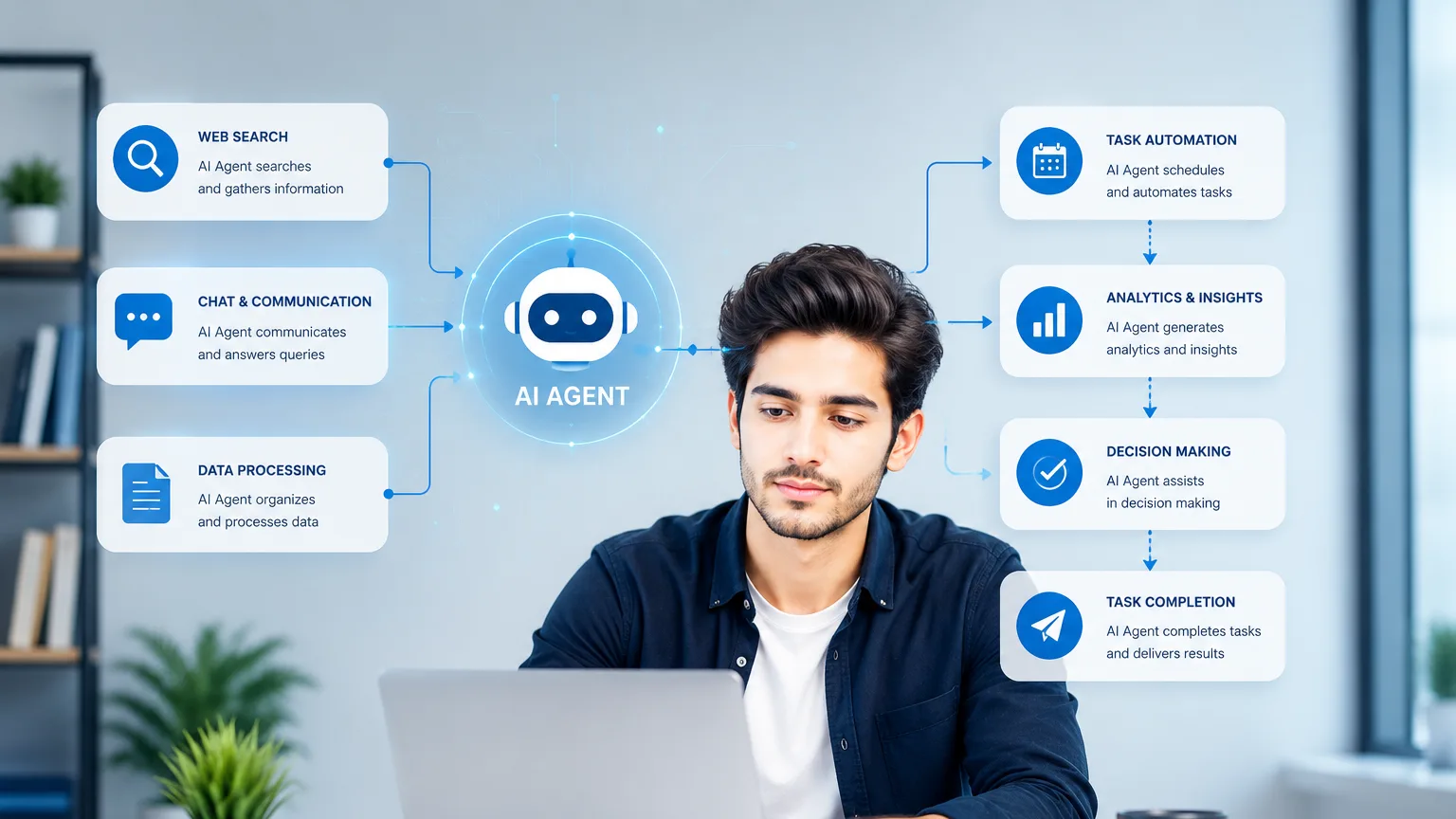
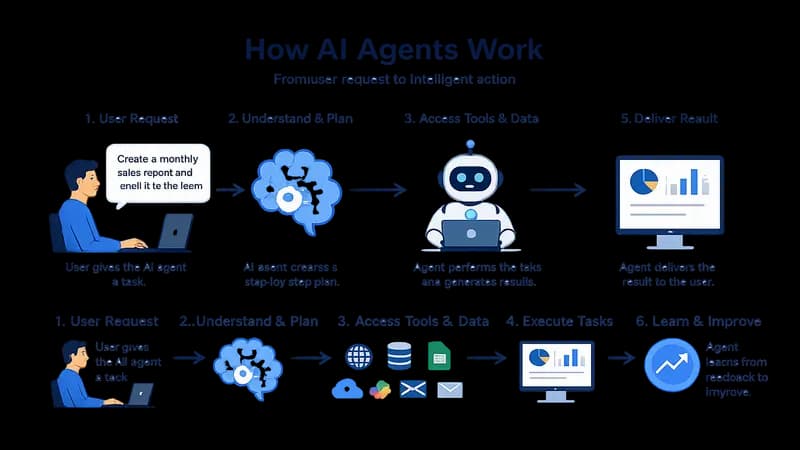
Unlike traditional chatbots, AI agents can understand a goal, break it into smaller tasks, use external tools, and complete workflows with minimal human input. Think of them as digital teammates that don't just assist but actively execute tasks.
For SaaS companies, this means users no longer have to navigate dozens of menus or dashboards. Instead, they can simply describe what they want.
Imagine telling your CRM:
"Find my top 20 customers who haven't purchased in the last three months, create a personalized email campaign, and schedule it for Monday morning."
An AI agent can perform the entire workflow in minutes.
Software development is experiencing the same transformation. Developers are using AI agents to generate code, review pull requests, write tests, explain unfamiliar codebases, create documentation, and even help deploy applications. Instead of replacing engineers, these tools reduce repetitive work so developers can focus on solving complex problems.
This shift is also changing how SaaS products are designed. Rather than building dozens of separate features, companies are creating AI-powered experiences where users simply describe an outcome, and the software determines the best way to achieve it. The interface becomes conversational, while the intelligence happens behind the scenes.
Some of the biggest technology companies are already investing heavily in AI agents because they see them becoming a core part of modern software. Products from Microsoft, Google, OpenAI, Anthropic, and many fast-growing startups are moving toward autonomous workflows that save time, improve productivity, and deliver more personalized experiences.
For startups and SaaS founders, this presents an opportunity to build smarter products without dramatically increasing team size. Even small teams can automate customer support, sales operations, reporting, onboarding, and internal workflows by integrating AI agents into their platforms.
The future of software is no longer about adding more buttons or more dashboards. It's about creating software that understands user intent and completes meaningful work on behalf of the user. As AI models continue to improve, AI agents are expected to become a standard feature in the next generation of SaaS applications, changing how businesses build, use, and experience software.
Key Takeaways
-
AI agents go beyond answering questions by completing real tasks and workflows.
-
SaaS products are becoming more conversational and outcome driven.
-
Developers use AI agents to speed up coding, testing, debugging, and documentation.
-
Businesses can automate repetitive operations while improving productivity and customer experience.
-
AI agents are becoming a competitive advantage for modern SaaS companies and are likely to shape the next generation of software.
Frequently asked questions
An AI agent is an intelligent software system that can understand goals, plan tasks, use external tools, and complete actions with minimal human intervention.
Chatbots mainly respond to prompts, while AI agents can reason, plan multiple steps, use APIs, remember context, and complete complex workflows autonomously.
No. AI agents automate repetitive development tasks and accelerate coding, testing, debugging, and documentation, but human developers remain essential for architecture, product decisions, creativity, and oversight.
AI agents enable personalized customer experiences, automate business operations, improve productivity, and may even shift SaaS pricing toward usage- or outcome-based models.
The next generation of AI agents will become more collaborative, multimodal, and autonomous, handling increasingly complex workflows across software development and enterprise operations while still requiring human governance.